Every minute counts when someone’s heart stops. Cardiac arrest strikes without warning — at home, at work, on the street — and the actions taken in those first few minutes largely determine who survives. Two interventions stand above all others in saving lives: high-quality chest compressions and early defibrillation. Together, they form the backbone of the American Heart Association’s (AHA) Chain of Survival, and understanding why they matter can make you the difference between someone’s life and death.
What Is the Importance of Chest Compressions?
When the heart stops, blood flow to the brain and vital organs stops with it. Brain cells begin dying within four to six minutes. Chest compressions manually pump the heart, circulating oxygenated blood and buying critical time until the heart can restart. Without them, survival odds plummet fast.
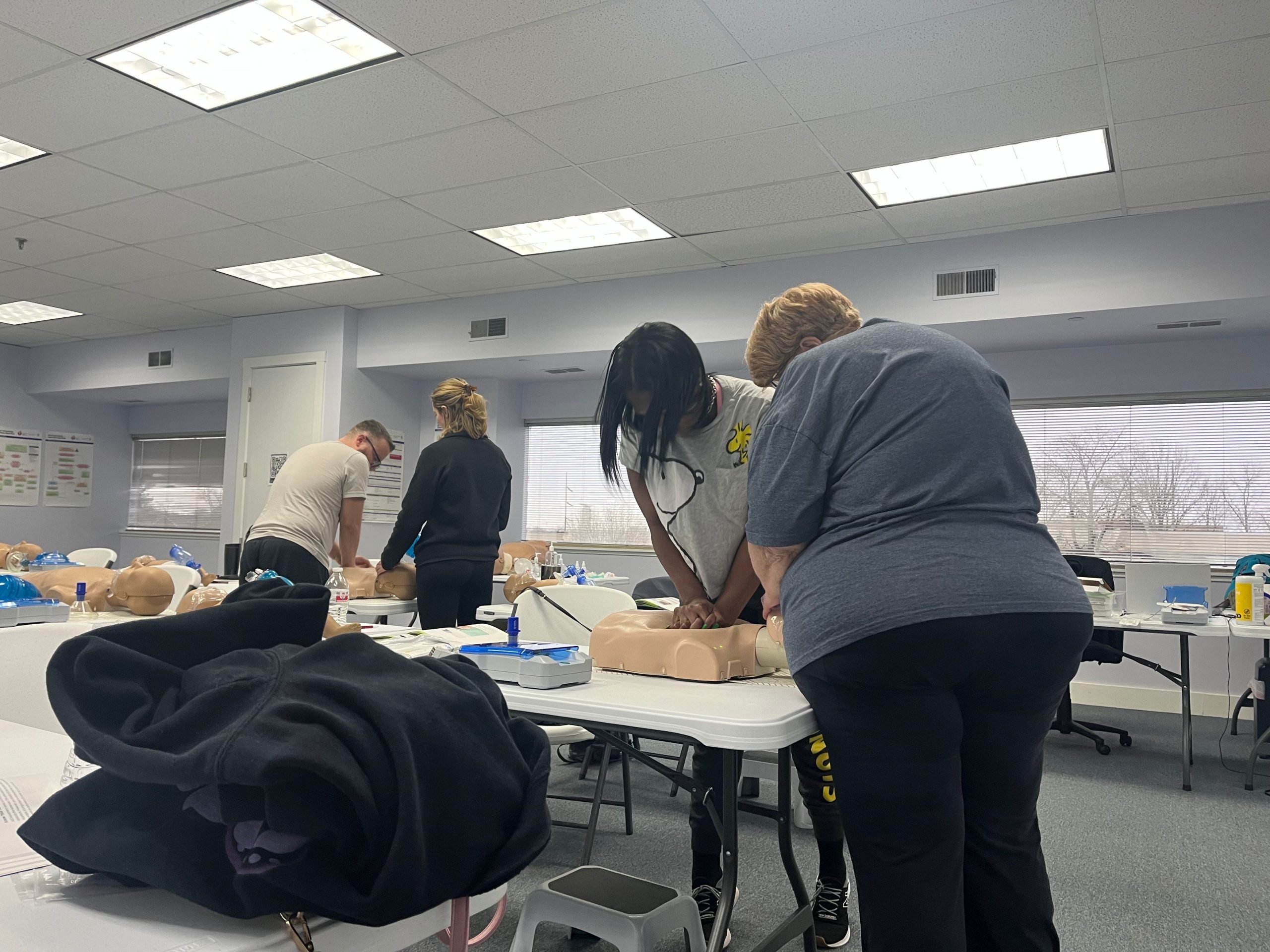
But not all compressions are equal. The AHA defines high-quality CPR by five specific standards: a compression rate of 100–120 per minute, a depth of at least 2 inches (50 mm) in adults, full chest recoil between each compression, a chest compression fraction above 80%, and no excessive ventilation. Each standard exists for a reason rooted in physiology.
Compressions drive coronary perfusion pressure (CPP) — the force that pushes blood through the coronary arteries into the heart muscle. Research published in Circulation by the AHA shows that CPP is the primary determinant of myocardial blood flow during CPR and directly predicts the likelihood of return of spontaneous circulation (ROSC). When the compression rate drops below 100 per minute, ROSC rates fall significantly. When depth is inadequate, the heart receives insufficient perfusion to restart.
A systematic review and meta-analysis confirmed that compression depth was significantly associated with survival to hospital discharge and ROSC. Survivors consistently received deeper compressions than non-survivors. This is not a minor detail — it is the mechanism by which CPR keeps people alive long enough for definitive treatment.
What Is the Importance of Early Defibrillation in CPR?
Chest compressions sustain life — but they do not restart the heart. Most sudden cardiac arrests occur because the heart’s electrical system fires chaotically, causing ventricular fibrillation (VF) or ventricular tachycardia (VT). In these rhythms, the heart quivers uselessly instead of pumping. Only an electrical shock from a defibrillator or automated external defibrillator (AED) can reset that chaotic signal and restore a normal rhythm.
This is why early defibrillation is so critical. Every minute that passes without a shock reduces survival odds by 7–10%. EMS teams typically take 6–12 minutes to reach a cardiac arrest scene. Without a bystander using an AED in the meantime, most victims do not survive. When an AED delivers a shock within 3–4 minutes of arrest, success rates jump from as low as 3% to as high as 70%. If defibrillation occurs within the first 1–2 minutes, survival rates can reach 90% or more.
Chest compressions and defibrillation work as partners. CPR preserves the heart’s responsiveness to a shock. A heart starved of blood for several minutes moves out of a shockable rhythm and into one that an AED cannot correct. Maintaining perfusion through strong compressions keeps the window for successful defibrillation open longer. This is why the AHA’s Chain of Survival links early CPR and early defibrillation as sequential, interdependent steps — not alternatives.
Why Is Early Defibrillation Important to Survive?
The 2024 CARES (Cardiac Arrest Registry to Enhance Survival) Annual Report provides some of the most current and compelling data available. In 2024, there were an estimated 263,711 EMS-treated, nontraumatic out-of-hospital cardiac arrest (OHCA) cases in the United States. Overall survival to hospital discharge was just 10.5%. However, when bystanders witnessed the arrest and immediately started CPR, survival climbed to 13.0% — compared to 7.6% for unwitnessed arrests.
Those numbers reveal a painful gap. Only 41.7% of OHCA patients received bystander CPR at all. The majority of cardiac arrests — around 70% — happen at home, often in front of family members who do not know what to do. Increasing bystander action through CPR training directly translates into lives saved.
The AHA’s 2025 Guidelines further emphasize that defibrillation within 3–5 minutes of cardiac arrest is the most important therapeutic step for terminating ventricular fibrillation. Early AED access in public places reflects this reality. Survival rates for cardiac arrest in public settings reached 21.1% — more than double the survival rate for arrests in the home — largely because AEDs are more accessible and bystanders are more likely to act.
What Is the Importance of High-Quality CPR?
High-quality CPR is not just about doing compressions — it is about doing them correctly and continuously. The chest compression fraction (CCF), the proportion of total resuscitation time spent actively compressing, should exceed 80%. Interruptions for anything other than defibrillation or airway management reduce perfusion and lower the chance of ROSC.
Research in Scientific Reports on in-hospital cardiac arrests found that higher CCF correlated significantly with both survival to discharge and better neurological outcomes in resuscitated patients. In real-world resuscitations, hitting all five high-quality CPR targets simultaneously is rare. Studies show that only about 13.7% of compressions meet the combined standard of correct rate and correct depth. This gap highlights why hands-on, skills-based training matters so much.
Rescuer fatigue also plays a role. Compression depth decreases measurably within two minutes of continuous CPR. For team-based resuscitations, the AHA recommends switching compressors every two minutes to maintain quality. For bystanders working alone, awareness of this fatigue — and the commitment to push through it — can mean the difference between adequate and inadequate perfusion.
The broader impact of high-quality CPR also extends to neurological outcomes. When the brain receives adequate blood flow during cardiac arrest, survivors are far more likely to recover without permanent brain damage. CARES data from 2023 showed that among adult in-hospital cardiac arrest survivors, 79.2% had a favorable neurologic outcome — a figure tied directly to the quality and speed of resuscitation efforts.
The Bottom Line: Training Saves Lives
Cardiac arrest does not announce itself. It does not wait for a trained professional to be nearby. The single greatest factor in whether a victim survives is whether the person standing closest acts quickly — with strong compressions, minimal interruptions, and an AED in hand. Bystander CPR alone can double or triple a victim’s chance of survival. Combined with defibrillation within three to five minutes, survival rates that once hovered near zero can reach 48–74%.
That is not a statistic — it is a person who goes home to their family. And it starts with training.
Take Action Today — Get Certified in Columbus
CPR Columbus is an American Heart Association-authorized training site serving the Columbus community. Whether you need CPR certification in Columbus for the first time or a BLS certification in Columbus to meet your healthcare provider requirements, CPR Columbus offers stress-free, hands-on classes for every level. Courses include BLS for Healthcare Providers, ACLS, PALS, and CPR and First Aid — all taught by AHA-certified instructors in a supportive, skill-focused environment.
Do not wait for an emergency to wish you had trained. Enroll in a CPR or BLS certification course at CPR Columbus today and gain the confidence and skills to save a life.