When a patient cannot breathe, every second counts. Airway obstruction represents one of the most critical emergencies that healthcare providers and first responders face. A systematic, algorithmic approach can mean the difference between life and death. Understanding current evidence-based protocols for managing airway obstruction equips you to act swiftly and effectively when breathing becomes compromised.
Understanding Airway Obstruction: The Foundation of Emergency Response
Airway obstruction occurs when the normal flow of air through the respiratory system becomes blocked or severely restricted. This anatomic narrowing can be acute or chronic, partial or complete, with complete obstruction indicating total inability to move air in or out of the lungs. The upper airway may be obstructed by foreign bodies, swelling, trauma, or various pathological conditions.
Medical emergencies involving airway obstruction demand immediate recognition and intervention. Acute cases require emergency action because the decreased ability to ventilate can prove fatal within minutes. Healthcare providers must quickly differentiate between types of obstruction to select the most appropriate intervention strategy.
The 2025 American Heart Association Guidelines for Foreign-Body Airway Obstruction
The American Heart Association released comprehensive updates in October 2025 that fundamentally changed how we approach choking emergencies. For conscious adults experiencing airway obstruction, rescuers should now alternate five back blows and five abdominal thrusts until the object is expelled or the person becomes unresponsive.
This updated protocol represents a significant shift from previous guidance. The systematic alternating pattern—five forceful back blows followed by five abdominal thrusts—creates multiple mechanisms to dislodge the obstruction. Back blows generate sudden increases in intrathoracic pressure, while abdominal thrusts compress the diaphragm upward to force air through the airway.
For infants experiencing airway obstruction, the approach differs critically. Caregivers should use five back blows followed by five chest thrusts with the heel of one hand, avoiding abdominal thrusts, which pose injury risk. The infant’s smaller size and developing organs require this modified technique to prevent internal damage while still creating sufficient pressure to clear the blockage.
Advanced Airway Management: The Linear Algorithm Approach
When basic interventions fail or when dealing with more complex airway challenges, healthcare professionals rely on structured algorithms. The 2025 Difficult Airway Society guideline maintains a linear algorithm of Plan A through Plan D: intubation, supraglottic airway, facemask ventilation, and emergency front-of-neck airway.
This systematic progression ensures providers have clear next steps when initial attempts fail. Plan A focuses on tracheal intubation using videolaryngoscopy as first-line equipment where available. Modern guidelines emphasize maximizing first-attempt success rather than simply managing repeated failures. Research shows that first-pass success significantly improves patient outcomes and reduces complications.
When intubation proves unsuccessful, Plan B involves placing a supraglottic airway device. These devices sit above the vocal cords and can establish a patent airway quickly. If this fails, Plan C uses facemask ventilation techniques. The final option, Plan D, involves performing an emergency front-of-neck airway—a surgical intervention reserved for “cannot intubate, cannot oxygenate” scenarios.
Optimizing Oxygenation Throughout Airway Obstruction Management
Continuous oxygen delivery throughout airway management is prioritized, with strategies such as high-flow nasal oxygen, non-invasive ventilation, and head-up ramping given emphasis. Maintaining oxygenation prevents the rapid desaturation that can lead to cardiac arrest and brain injury.
Preoxygenation before any airway intervention extends the safe apnea time—the window during which providers can work to secure the airway before oxygen levels become critically low. Positioning patients in a ramped or head-up position improves lung mechanics, particularly in obese patients or those with respiratory compromise.
Modern airway management emphasizes the concept of apneic oxygenation. Even when a patient is not breathing, delivering oxygen through nasal cannulas or other devices can maintain adequate oxygen saturation, buying crucial time for complex interventions.
The Role of Human Factors and Team Coordination in Airway Obstruction Emergencies
Technical skills alone do not guarantee successful airway management. Guidelines emphasize non-technical aspects, including team briefing, role assignment, simulation training, and clear documentation. When airway emergencies unfold, coordinated team response dramatically improves outcomes.
Before initiating airway management, teams should conduct a structured briefing. This includes identifying the primary airway manager, assigning specific roles to team members, and ensuring all necessary equipment is immediately accessible. Clear communication prevents confusion during high-stress situations when seconds matter.
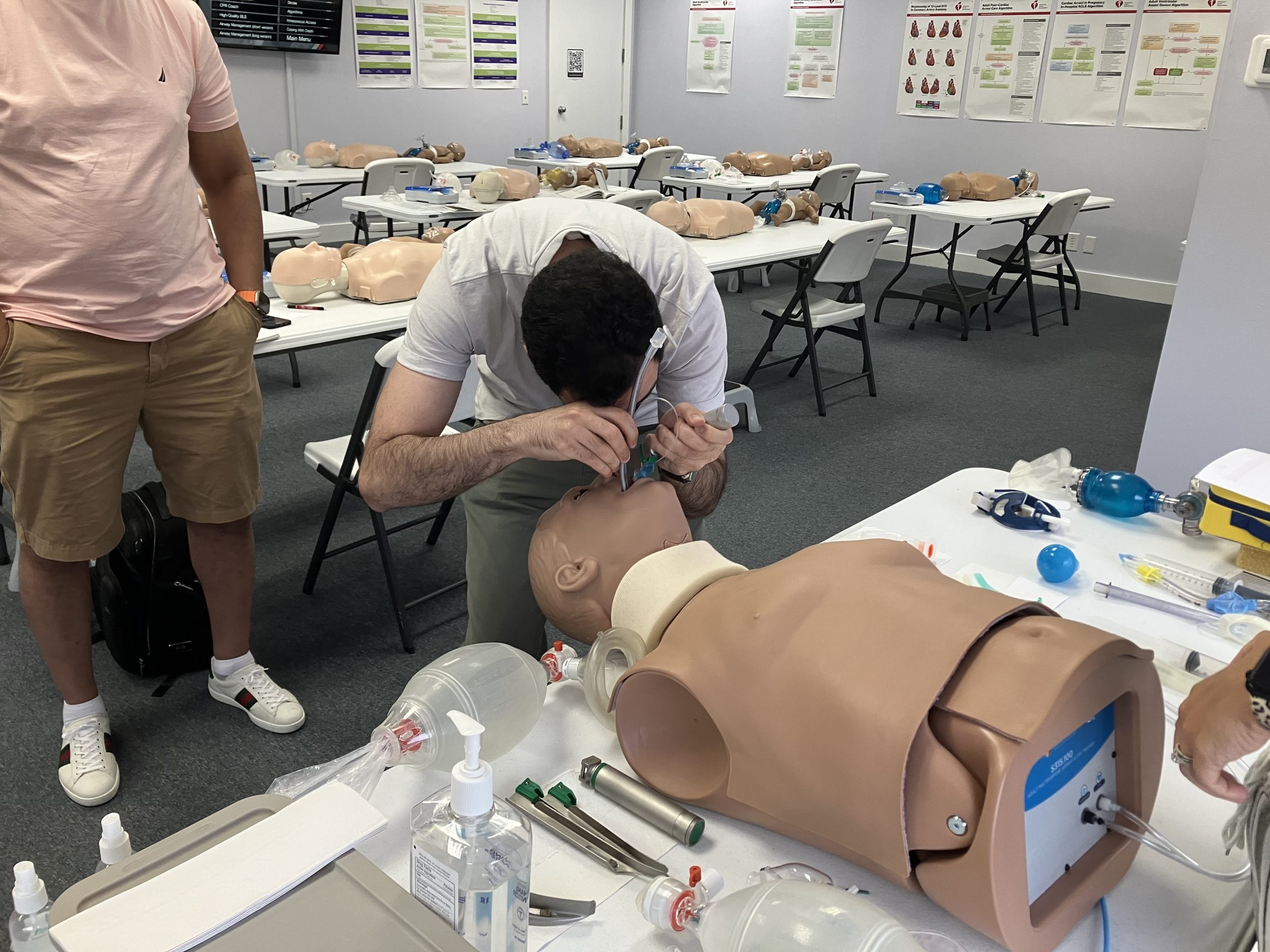
Simulation training allows teams to practice rare but critical scenarios. Practicing transitions between algorithm plans—moving from intubation attempts to supraglottic airways to emergency surgical airways—builds muscle memory and confidence. Regular drills ensure that when real emergencies occur, teams respond automatically with coordinated precision.
Evidence-Based Decision Making: When to Progress Through Algorithm Plans
The American Society of Anesthesiologists’ 2022 Difficult Airway algorithm identifies the key decision point as whether to induce anesthesia before airway management. This critical choice shapes the entire approach to a predicted difficult airway.
For anticipated difficult airways, awake or sedated intubation often provides the safest approach. Patients maintain their own respiratory drive and airway muscle tone, reducing the risk of complete airway collapse. However, this technique requires cooperation and adequate topical anesthesia.
Knowing when to move between algorithm plans is equally important. Guidelines highlight the importance of limiting attempts, with consideration of one direct laryngoscopy attempt before moving to videolaryngoscopy, and limiting total attempts by the primary manager to three. Repeated unsuccessful attempts cause airway trauma, swelling, and bleeding—making subsequent attempts even more difficult.
Post-Intervention Care and Documentation in Airway Obstruction Cases
Successful airway management does not end when the airway is secured. After successful intervention, guidelines emphasize confirming placement with waveform capnography, monitoring ventilation and oxygenation, and documenting what happened, including plans for further airway management.
Waveform capnography provides definitive confirmation of endotracheal tube placement in the trachea. The characteristic waveform pattern cannot be faked and gives continuous feedback about tube position and ventilation adequacy. This technology has dramatically reduced unrecognized esophageal intubations.
Documentation serves multiple purposes. It creates a medical-legal record of the emergency response. More importantly, it provides critical information for future providers who may need to manage the same patient’s airway again. Noting what worked, what failed, and what anatomical challenges were encountered helps subsequent teams prepare appropriate equipment and strategies.
Take Action: Prepare for Airway Emergencies Before They Happen
Understanding algorithmic approaches to airway obstruction is just the beginning. Actual competence requires hands-on practice and regular skill maintenance. The most current evidence-based protocols mean nothing if rescuers cannot execute them effectively under pressure.
Whether you are a healthcare professional or a concerned community member, proper training in airway management and CPR can save lives. Don’t wait until an emergency strikes to wish you had prepared. Take action now to build the skills and confidence you need.
Ready to master life-saving airway management techniques? CPR Louisville, an American Heart Association training site, offers comprehensive courses in BLS for Healthcare Providers, ACLS, PALS, and CPR and First Aid. All classes are stress-free and hands-on, ensuring you gain practical skills you can apply in real emergencies. Enroll in CPR certification in Louisville or upgrade your expertise with ACLS classes in Louisville today. Your training could make all the difference when someone’s airway—and life—depends on you.